Learning how to describe yourself in Spanish is one of the most useful skills for real-life communication because we use it constantly. In this post, you’ll learn the most important Spanish vocabulary to describe faces naturally, including hair, eyes, facial features, accessories...
Basic structure to describe yourself in Spanish
A natural order is usually:
Hair → Eyes → Facial features → General appearance (clothes, accessories...)
But today we are going to focus on how to describe a face in Spanish.
Some examples:
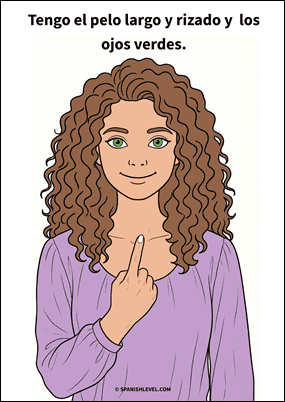
- Tengo el pelo largo y rizado y (tengo)* los ojos verdes. (I have long, curly hair and green eyes.).
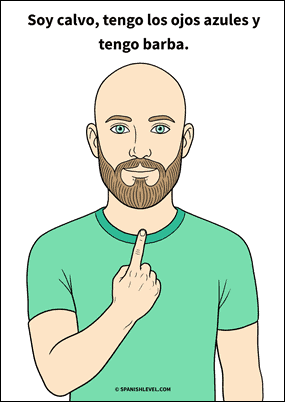
- Soy calvo, tengo los ojos azules y tengo barba. (I'm bald, I have blue eyes and I have a beard.).
*the second "tengo" can be omitted to avoid repetition, as it is clear from the context.
Use of verb "tener" (to have)
Used for both physical characteristics that can easily change over time (such as hair color or texture) or cannot change (such as eye color).
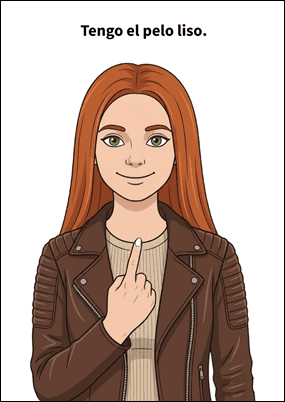
- Tengo el pelo liso.
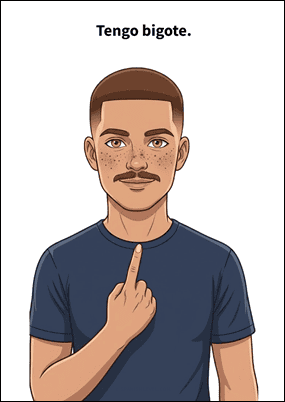
- Tengo bigote.
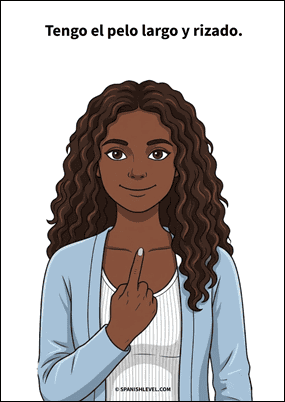
- Tengo el pelo largo y rizado.
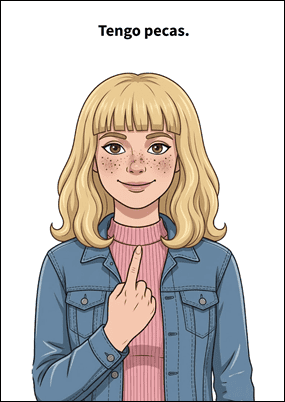
- Tengo pecas.
Use of verb "ser" (to be)
Used for general physical characteristics which generally do not change or are permanent over a long period of time.
Examples:
Use of verb "llevar" (to wear)
This verb is used for accessories, clothes or styles.
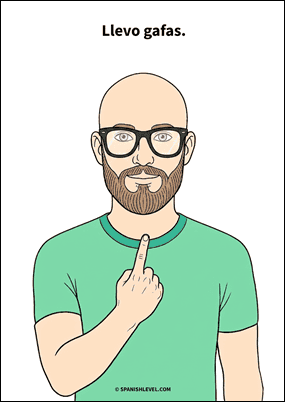
- Llevo gafas.
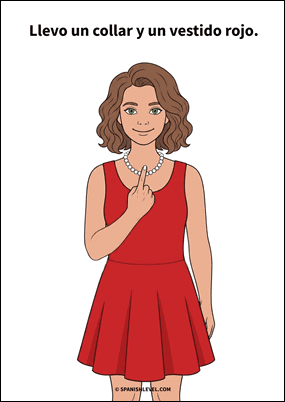
- Llevo un collar y un vestido rojo.
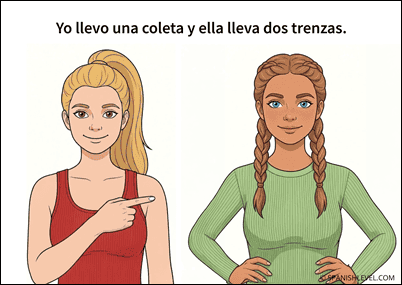
- Yo llevo una coleta y ella lleva dos trenzas.
Below are some tables with vocabulary related to hair, which is useful for describing facial features in Spanish. We recommend practicing with the exercises provided below.
Hair vocabulary in Spanish
|
Spanish
|
English
|
| El pelo / el cabello |
Hair |
| Pelo largo |
Long hair |
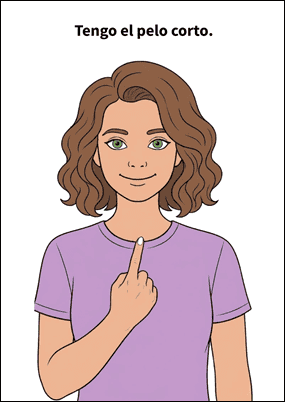
| Pelo corto |
Short hair |
| Media melena |
Medium-length hair |
| Pelo liso |
Straight hair |
| Pelo rizado |
Curly hair |
| Pelo ondulado |
Wavy hair |
| Pelo rubio |
Blonde hair |
| Pelo castaño |
Brown hair |
| Pelo negro |
Black hair |
| Pelo pelirrojo |
Red hair |
| Pelo gris |
Gray hair |
| Calvo |
Bald |
| El flequillo |
Bangs |
| La coleta |
Ponytail |
| El moño |
Bun |
| La trenza |
Braid |
| La raya del pelo |
Hair part |
| Las mechas |
Highlights |
| Los rizos |
Curls |
| Las rastas |
Dreadlocks |
| La cabeza rapada |
Shaved head |
Face vocabulary in Spanish
|
Spanish
|
English
|
| Tener barba |
To have a beard |
| Tener bigote |
To have a moustache |
| Tener perilla |
To have a goatee |
| Llevar gafas |
To wear glasses |
| Llevar lentillas |
To wear contact lenses |
| Tener pecas |
To have freckles |
| Tener hoyuelos |
To have dimples |
| Tener una cicatriz |
To have a scar |
| Tener un lunar |
To have a mole |
| Tener los ojos azules |
To have blue eyes |
| Tener los ojos verdes |
To have green eyes |
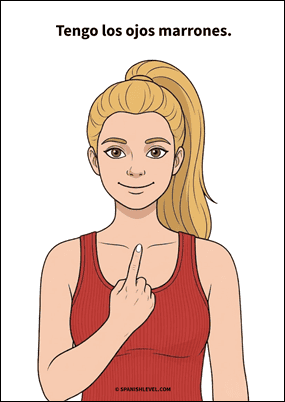
| Tener los ojos marrones |
To have brown eyes |
| Tener los ojos negros |
To have black eyes |
| Tener los ojos grises |
To have grey eyes |
| Tener los ojos grandes |
To have big eyes |
| Tener los ojos pequeños |
To have small eyes |
| Tener las cejas pobladas |
To have thick eyebrows |
| Tener las cejas finas |
To have thin eyebrows |
| Tener las pestañas largas |
To have long eyelashes |
| Tener la nariz grande |
To have a big nose |
| Tener la nariz pequeña |
To have a small nose |
| Tener la nariz recta |
To have a straight nose |
| Tener la nariz respingona |
To have an upturned nose |
| Tener los labios finos |
To have thin lips |
| Tener los labios carnosos |
To have full lips |
| Tener la cara redonda |
To have a round face |
| Tener la cara alargada |
To have a long face |
| Tener la mandíbula marcada |
To have a defined jawline |
| Tener las mejillas sonrosadas |
To have rosy cheeks |
| Sonreír mucho |
To smile a lot |